As an Amazon Associate, BuyRight Notes earns from qualifying purchases. We pick products from published specs and our own notes, not paid placements.
Which coffee setup fits my kitchen?
Tap what is true for you. No brand names needed; we do the knowing.
Fits your kitchen
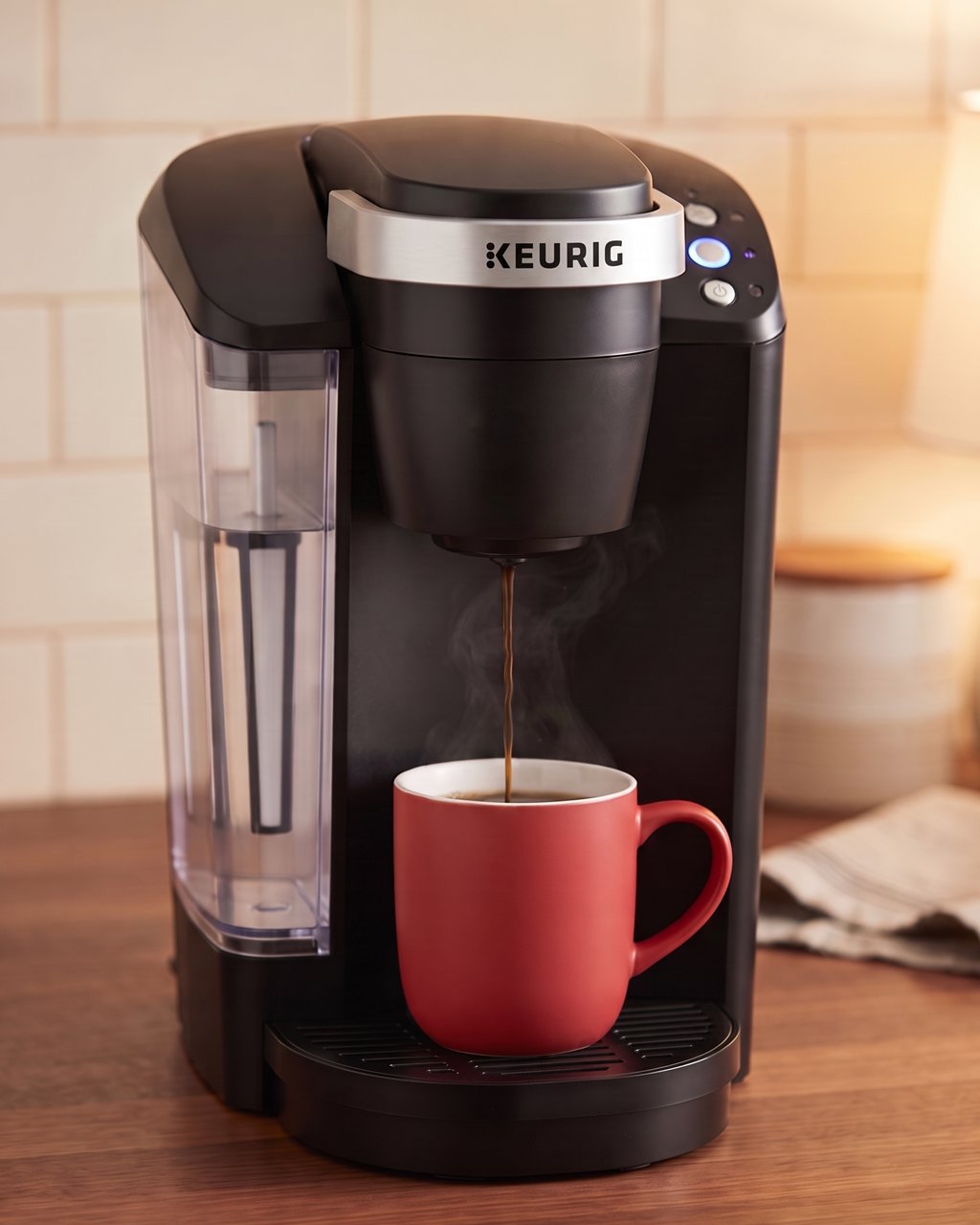
Keurig K-Classic, 3 cup sizes
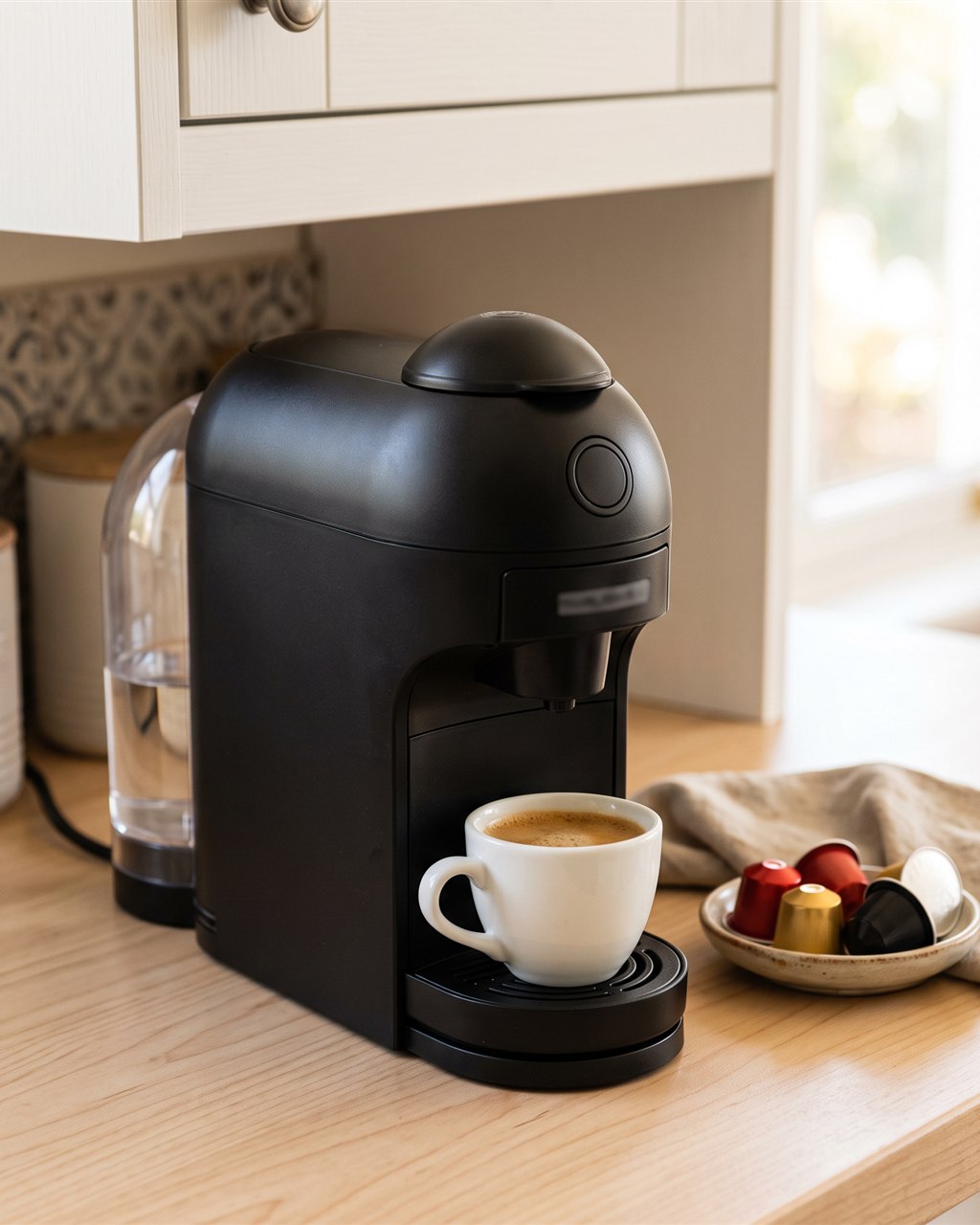
One button, one mug, no grinder and nothing to measure. For a weekday kitchen that wants hot coffee in a minute, this is the setup that gets used every single day.
Check these before you order
Height with the lid open: about 17.6 in. Measure under your cabinets before you order.
Pods only: it brews K-Cup pods, in 6, 8 or 10 oz. It does not make espresso, milk drinks or a full pot.
Tank access: the 48 oz tank lifts off the side, so it needs room on that side, not behind.
The kit
Keurig K-Classic, 3 cup sizes: the whole setup; pods are the only supply.
Prefer no machine at all? The Chemex 8-cup makes a clean pot with a kettle and paper filters.
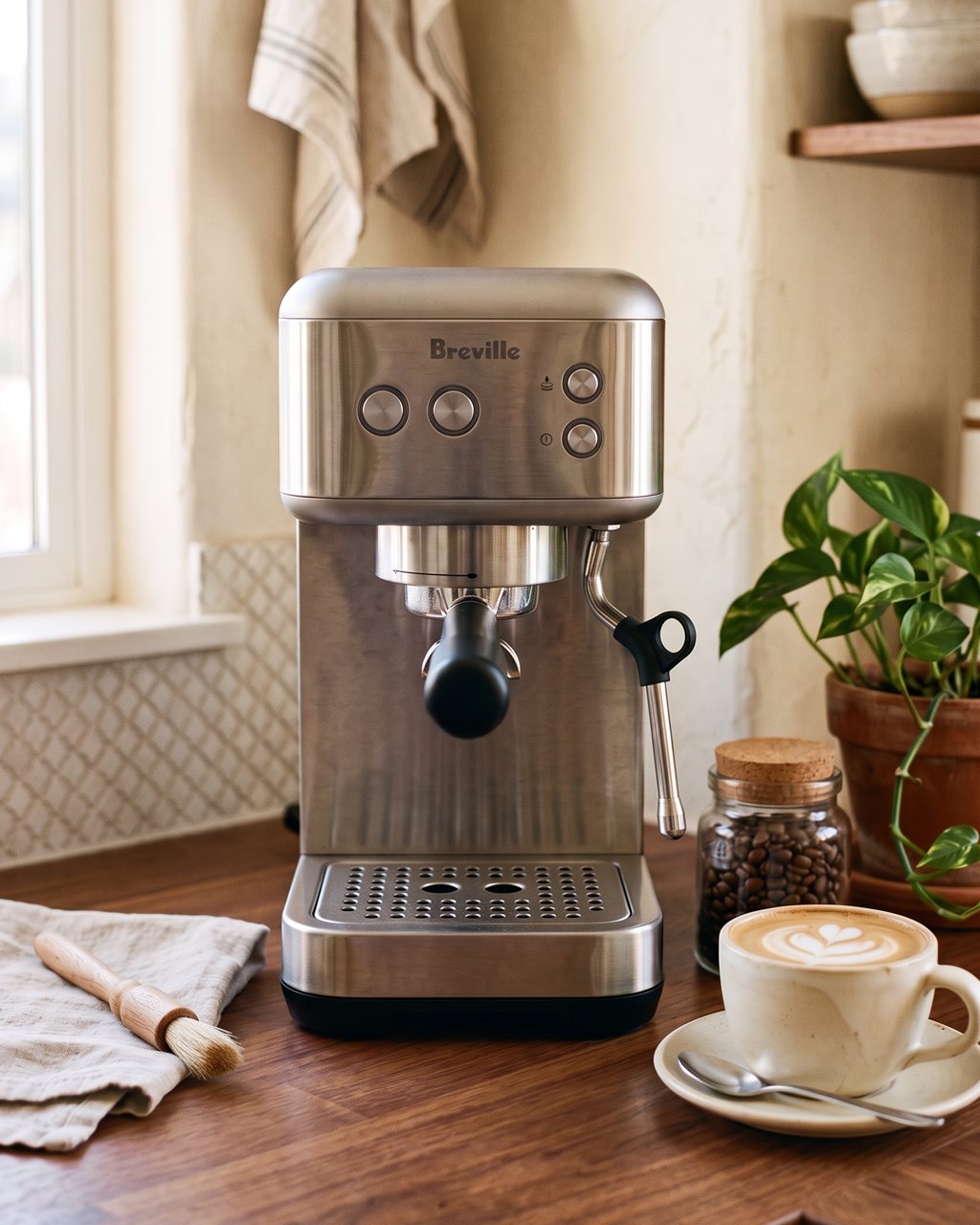
Cafe-style espresso and steamed milk from a machine 6.3 inches wide that is hot in about three seconds. It is the small-kitchen pick because it does the two things a latte needs and nothing that eats counter.
Check these before you order
Counter and cabinet clearance: it is 12 in tall and 13.7 in deep, and the 47 oz tank lifts out at the back, so leave a gap behind it or plan to reach over.
Accessory size: 54 mm. Buy tampers, baskets and funnels sold for Breville 54 mm, not 'universal' 58 mm ones.
Grind plan: no built-in grinder. It ships with pressurized and non-pressurized baskets, so you can start on pre-ground and add an espresso grinder later.
The kit
Breville Bambino, 54 mm espresso: the machine, with a tamper, a milk jug and both basket types in the box.
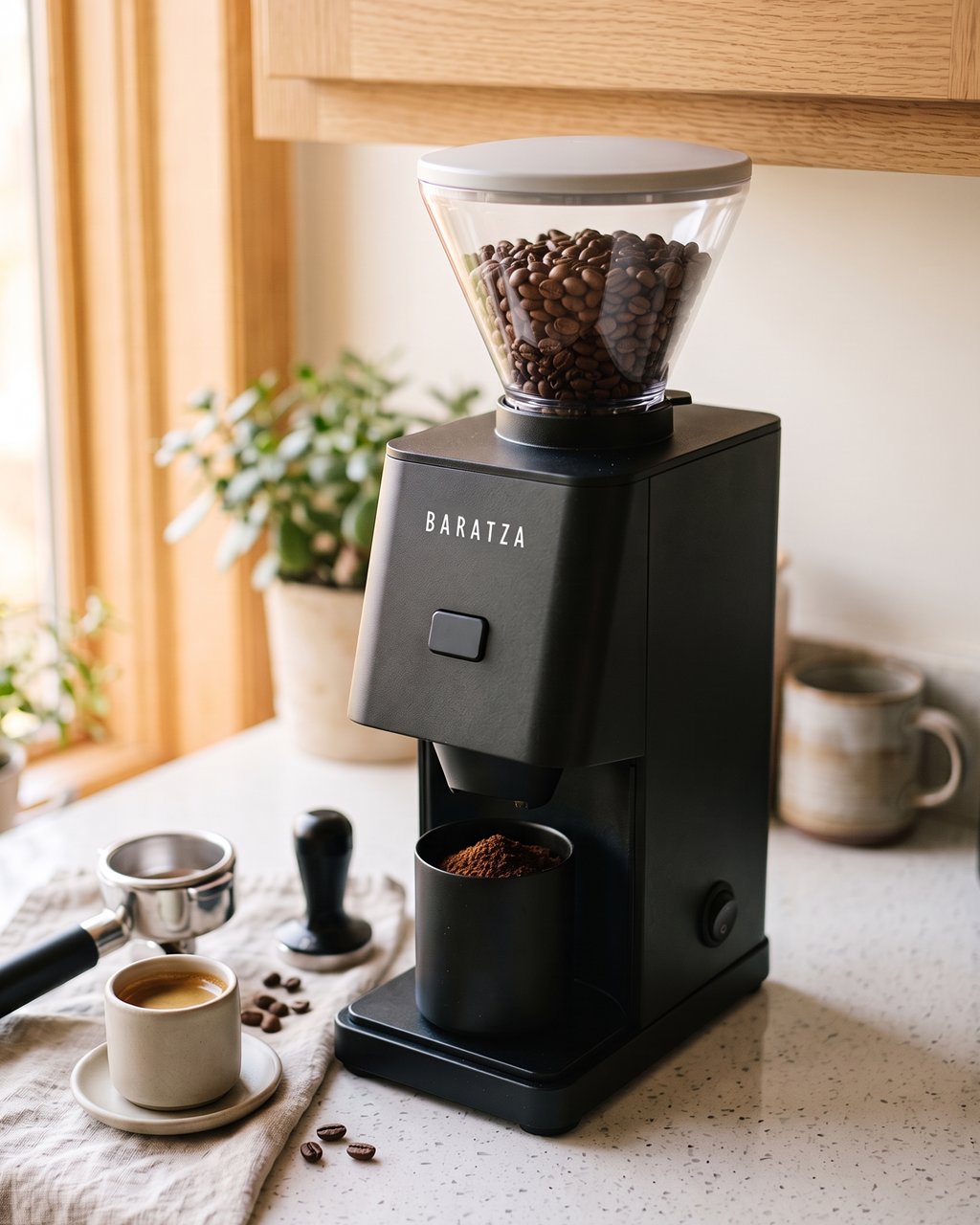
Baratza Encore ESP: the grinder with a real espresso range. Start on pre-ground with the pressurized basket if you like; add this when you want to dial in a shot.
A small bag of coffee you can finish in two weeks. Chocolate and nut notes are the easy start for milk drinks.
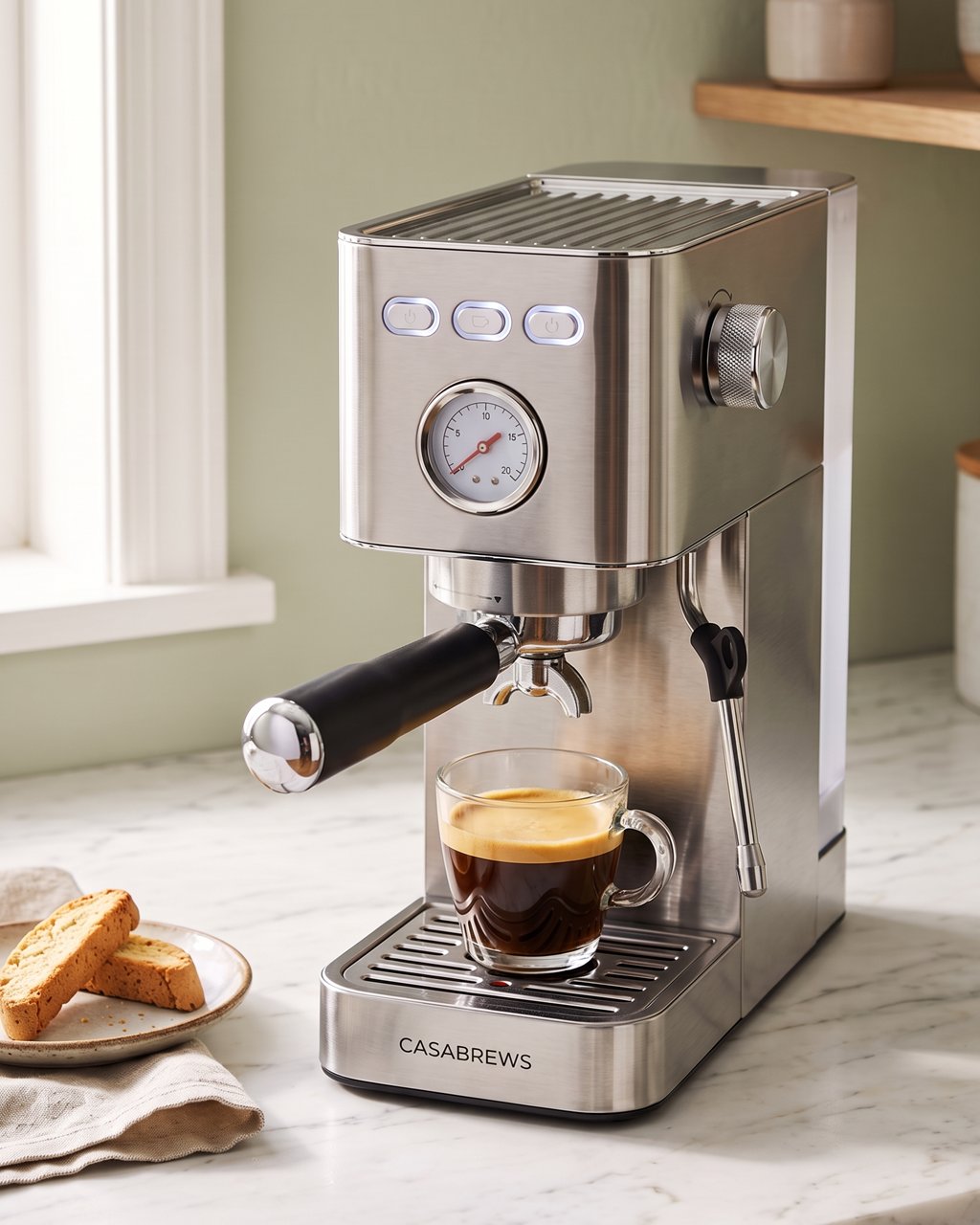
The narrowest espresso machine we list, 5.5 inches wide, with a steam wand for milk and a starter price. When the only free spot is a corner, this is the one that actually fits there.
Check these before you order
Accessory size: 51 mm, and most kits are 54 or 58 mm. Search accessories by the model name CM5418, not by 'universal'.
Baskets: a one-cup and a two-cup pressurized basket come in the box, so pre-ground espresso works from day one.
Tank and footprint: 34 oz removable tank, 5.5 in wide and 12.3 in deep; check the depth against your counter.
The kit
CASABREWS espresso machine, 51 mm: pressurized baskets in the box, so pre-ground espresso works on day one.
Baratza Encore ESP when you want fresh beans; hold the dosing cup under the chute for a 51 mm basket.
Accessories by model name only: search "CM5418", never "universal".
Bambino + Encore ESP, plus a pot for slow mornings
The full bar in about 18 inches: a compact espresso machine, a quiet grinder that covers espresso and filter coffee on one dial, and a glass pour-over for the mornings that want a whole pot instead of a shot.
Check these before you order
Your machine's basket size: the dosing cup is 54 mm and a 58 mm adapter is in the box; a 51 mm machine works with the cup held under the chute.
Espresso range: settings 1 to 20 are for espresso, 21 to 40 for filter coffee, so one grinder covers both if you also brew drip or pour-over.
Counter height: 13.4 in tall with the 120 g hopper on, which clears most under-cabinet spaces.
A full bar does not need a full counter. Put the 5.5-inch machine in the corner, the grinder on a shelf or the other side of the sink, and the Chemex in the cupboard until the weekend.
Check these before you order
Accessory size: 51 mm, and most kits are 54 or 58 mm. Search accessories by the model name CM5418, not by 'universal'.
Baskets: a one-cup and a two-cup pressurized basket come in the box, so pre-ground espresso works from day one.
Tank and footprint: 34 oz removable tank, 5.5 in wide and 12.3 in deep; check the depth against your counter.
The kit
CASABREWS espresso machine, 51 mm: the machine; buy accessories by the model name CM5418.
One touch, a pod, and coffee with crema in about a minute, from a machine only 10.4 inches tall. Under a low cabinet the pod machines with a lift-up lid do not fit; this one does, with nothing to open on top.
Check these before you order
Pods: Vertuo capsules only, sold by Nespresso and on Amazon; not Original-line pods, K-Cups or ground coffee.
Height: 10.4 in, so it clears a 15 in cabinet; the 25 oz tank is on the side, so leave that side open.
Sizes: the machine reads the pod and brews its size (espresso to 12 oz); check the pod range you want first.
The kit
Nespresso Vertuo Pop+, one-touch pod coffee: the whole setup; Vertuo capsules are the only supply.
Room above after all? The Keurig K-Classic takes K-Cups instead, with a lid that needs about 17.6 in.
Breville Barista Express, 54 mm with built-in grinder
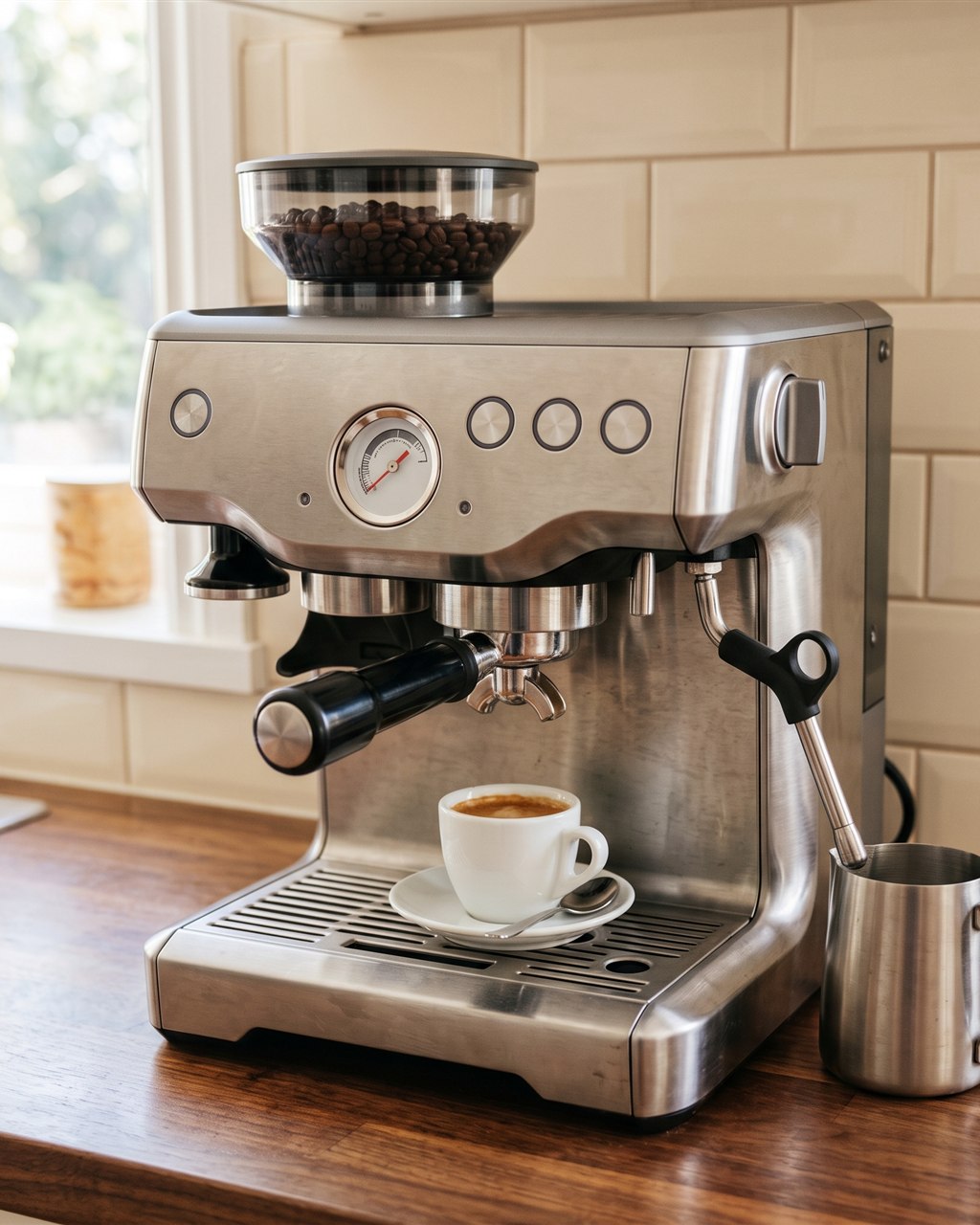
Fresh-ground espresso without a second machine on the counter: the burr grinder doses straight into the 54 mm portafilter, the wand steams the milk, and the tamper, baskets and jug come in the box. It asks for about 16 inches of counter in return.
Check these before you order
Counter width: 15.9 in wide with the hopper on, plus room beside it for a cup and the milk jug.
Above it: the bean hopper lid opens from the top, so leave clearance over the 12.4 in height; the 67 oz tank lifts out.
Accessory size: 54 mm, same as the Bambino; buy tampers, baskets and funnels sold for Breville 54 mm.
The kit
Breville Barista Express, 54 mm with built-in grinder: machine and grinder in one, with the tamper, both basket types and the milk jug included.
Escali Primo scale: weigh the beans and the shot for a repeatable recipe.
Chemex 8-cup: a clean pot from the same beans on slow mornings.
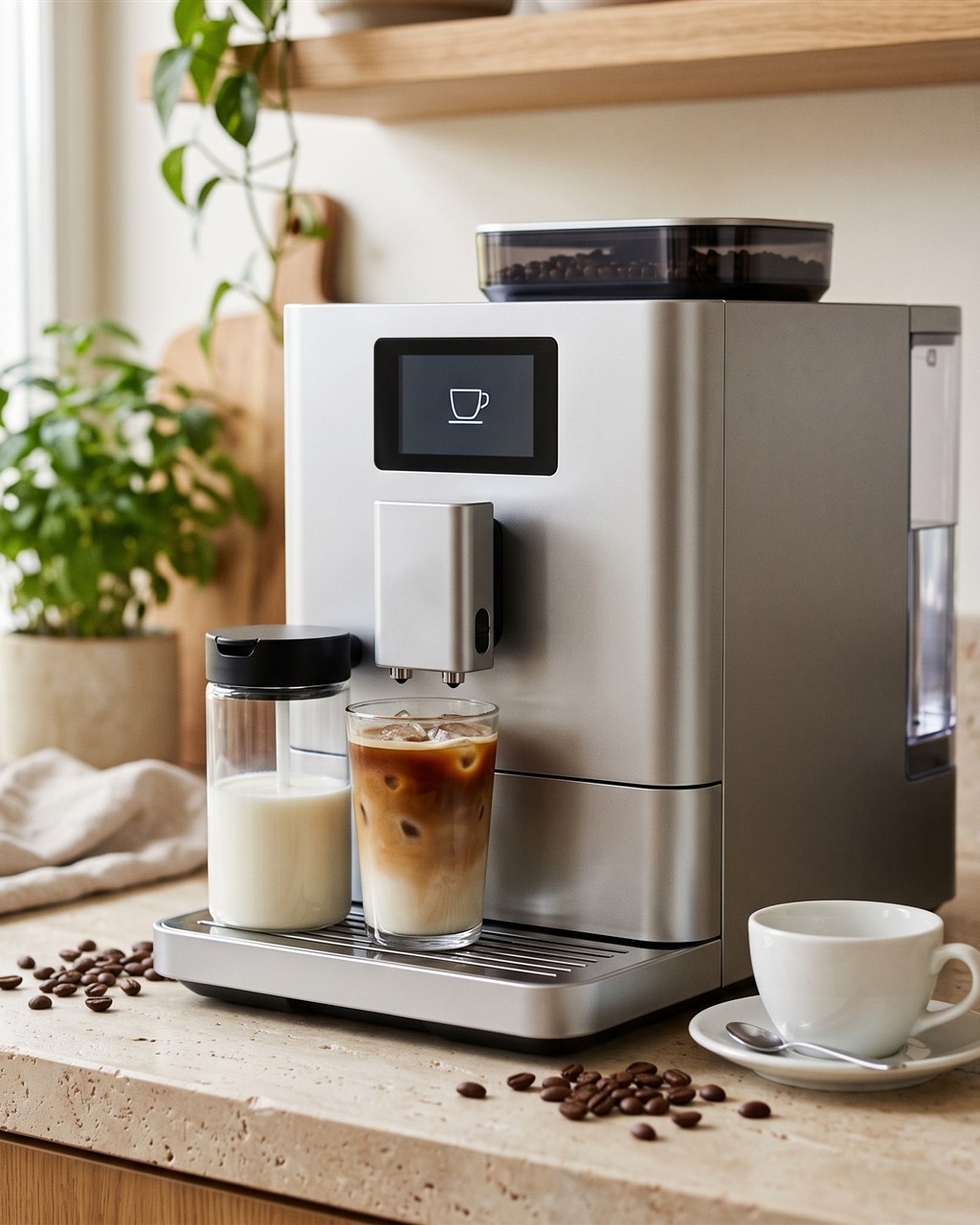
Press one button and it grinds, brews and froths on its own: 20 preset drinks, hot or iced, with two milk carafes so cold foam and hot foam each have their own. For the house that wants cafe drinks without learning a machine.
Check these before you order
Depth: 17.5 in front to back, so measure from the backsplash to the counter edge before ordering.
Two milk carafes come with it; plan fridge space for the one in use and a spot for the other.
Fully automatic: no portafilter or accessory size to match; whole beans only, 8.82 oz hopper.
The kit
De'Longhi Magnifica Duo, one-touch hot and iced: the whole bar in one box; whole beans are the only supply.
Sizes and tank details come from the makers' specifications, not hands-on testing. As an Amazon Associate, BuyRight Notes earns from qualifying purchases; using our links does not change the price you pay.
Already have a machine in mind?
Pick the brand and model and we show its accessory size, how its water tank comes out, and whether it needs a separate grinder.
What does my espresso machine need?
Will an espresso machine fit my kitchen?
Most espresso regrets happen before the first shot: the machine fits on paper, then you cannot refill the tank without dragging it out. Ten minutes with a tape measure settles it.
Usable counter width. The clear stretch where the machine will live, with room beside it for a cup and, if you grind fresh, the grinder.
Depth. From the backsplash to the safe front edge, with a gap behind for the cord and for rear-fill tanks.
Height under the cabinets. Top-fill tanks and pod lids need open air above the machine.
The refill path. Top, rear, or a tank that slides out the side: can you reach it, lift it and put it back without moving the machine?
The cord and the outlet. A safe path to power, away from the sink and the drip tray.
A top-fill tank works under cabinets only with room to open the lid. A rear-fill tank needs a real gap behind the machine or every refill becomes a chore. A removable side or front tank is the most forgiving. Confirm the exact model number and read its current dimensions before ordering; same-brand machines differ by generation.
Do I need a grinder?
Not on day one. Both machines we list ship with a pressurized basket, which makes a fair shot from pre-ground espresso coffee. Buy the grinder when you want fresh beans, a non-pressurized basket, or the ability to fix a shot that runs too fast or too slow; that fix is a grind change, and a drip grinder cannot make it.
Espresso needs a much finer, narrower grind range than drip coffee. The Baratza Encore ESP has a dedicated espresso range plus a coarser range for a pot, a 54 mm dosing cup and a 58 mm adapter in the box, and it is quiet enough for an early house.
Whole bean if you own an espresso-capable grinder; grind close to brewing and keep the bag sealed away from heat and light. Pre-ground if you want the fewest steps: buy coffee sold for espresso or a fine grind, and accept that you cannot make small adjustments when a shot tastes sour or bitter.
Which accessory size: 51, 54 or 58 mm?
Espresso accessories are not universal. The millimeter number is the basket diameter, and fit can still depend on basket depth, tabs and machine generation. Shop by exact model first and size second.
51 mm: compact consumer machines, including the CASABREWS CM5418 and the De'Longhi Dedica line.
54 mm: most Breville and Sage home machines, including the Bambino.
57 mm: Lelit's own group on the Anna PL41.
58 mm: most prosumer and commercial-style groups.
Risk, low to high: a tamper (a poor match leaves an untamped ring), a dosing funnel (must match diameter and mounting), a puck screen (needs headspace), a replacement basket (depth and ridges matter), a full portafilter (locking tabs and group fit must match). A listing that says "universal" but does not name your machine is missing information, not reassurance.
Your first bag of beans
Buy a small bag you can finish while it still tastes good; a value bag wastes more than it saves while you learn.
Pick tasting notes you already like: chocolate, nut and caramel notes suit milk drinks; brighter, fruitier coffees need more dialing in.
Use the roast date as planning, not pass/fail. Roasters commonly suggest using coffee within 2 to 4 weeks of roasting and resting espresso 5 to 7 days after roast; your taste decides.
Store it sealed at room temperature, away from sun, heat and moisture.
When dialing in, change one thing at a time: grind, dose, yield or time.
Keeping it clean
After each use: knock out the puck, rinse the parts the manual allows, and wipe the steam wand immediately. Milk residue hardens fast; this is the one task not to postpone.
Weekly: clean the tray, wipe the exterior, check the tank, and look around the group head for old grounds.
Monthly: whatever your model calls for: a cleaning cycle, a filter check, a deeper rinse. Descaling is not a universal monthly job; water hardness and the maker's schedule decide it. Never guess a chemical dose or use a product the manufacturer does not approve.
Keep the supplies in one small tray near the machine, without blocking the tank or the vents.
Questions people ask
Can an espresso machine go under kitchen cabinets?
Yes, if the tank comes out the back or the side. The Breville Bambino is 12 inches tall with a rear-lift tank, and the CASABREWS CM5418 has a removable rear tank, so both clear a 15-inch cabinet; leave a gap behind them for refills. A pod machine with a lid, like the Keurig K-Classic, needs about 17.6 inches open.
Do I need a grinder to start making espresso?
No. Both machines here include a pressurized basket that makes a fair shot from pre-ground espresso coffee, so you can start the day the box arrives. Add an espresso grinder such as the Baratza Encore ESP when you want fresh beans or want to fix a shot that runs too fast or too slow.
Is a 51 mm espresso machine a problem?
Only for accessories. A 51 mm machine like the CASABREWS CM5418 makes espresso the same way; the catch is that most tampers, baskets and funnels are sold for 54 or 58 mm. Search accessories by the model name and you avoid the mismatch entirely.
Pod machine or espresso machine for a small kitchen?
Pick by the drink, not the size. A pod machine makes hot coffee in about a minute with nothing to measure; an espresso machine makes real shots and steamed milk but needs a basket, a tamp and a rinse. Both fit an 18-inch stretch of counter.
What should I buy with a first espresso machine?
A small bag of coffee you can finish in two weeks, and nothing else until you have pulled a few shots. The grinder comes second, when you want fresh beans. Cleaning supplies should be only the ones your machine's maker names.
Chemex 8-cup: a clean pot from the same fresh grind, no machine at all.
Every pick page says who it is for, what to check, and who should skip it.
Updated September 27, 2026. Written from manufacturer specifications and manuals, not hands-on testing. Portafilter sizes verified against manufacturer pages on September 21, 2026 where available.